Renewal shines on Yundang lake in ecological revival
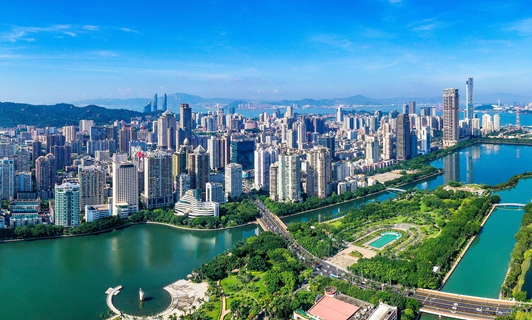
Yundang Lake in Xiamen, Fujian province, is recognized as an excellent model in the country's second batch of "Beautiful Rivers and Lakes". WANG HUOYAN/FOR CHINA DAILY
Yundang Lake in Xiamen, Fujian province, has undergone a remarkable transformation, evolving from a once-polluted body of water devoid of fish and shrimp to a vibrant sanctuary for egrets and other wildlife.
Previously choked by industrial and domestic sewage, the lake now serves as the city's "green lung", a testament to Xiamen's unwavering commitment to ecological priorities and green development.
Nestled in the heart of the city, this urban wetland and wildlife reserve is not only a cherished spot for residents and tourists to relax but also a thriving habitat for 88 species of birds. Its remarkable turnaround reflects Xiamen's broader ecological progress, which gained momentum with the launch of the Action Plan for Accelerating the Construction of a High-Appearance Xiamen (2020-25) in June 2020.
This strategic blueprint outlined 18 concrete measures across six key areas, including urban planning upgrades, infrastructure strengthening, and the creation of livable environments. These initiatives laid a solid foundation for the integrated protection and comprehensive management of the city's natural resources, including mountains, rivers, forests, farmlands, lakes, grasslands and sand.
In the realm of building livable homes, for example, Xiamen has made significant strides in enhancing infrastructure and supporting services. The Xiamen Botanical Garden has achieved the status of a national 5A-level scenic spot, becoming the city's second such attraction after Gulangyu Island.
The city has also continuously improved its non-motorized transport system, constructing a total of 311.5 kilometers of greenways. Notably, the "sea of clouds" and "forest sea" routes of the Xiamen Mountains-to-Sea Trail, which won the China Habitat Environment Example Prize, attracted 19.69 million visitors in 2024 alone.
Guided by scientific and technological innovation, Xiamen has reaped accolades in ecological civilization, including the prestigious UN-Habitat Scroll of Honor Award, National Ecological Garden City and National Forest City titles.
Green drive
During the 14th Five-Year Plan (2021-25), the city has maintained a leading position in air quality nationwide, ranking third among 168 key cities in 2024. It has also restored 150 hectares of coastal wetlands, nurtured more than 170 hectares of mangroves and achieved the lowest density of marine debris in Fujian, said Liao Huasheng, vice-mayor of Xiamen.
Efforts to expand green spaces have included afforesting nearly 1,200 hectares of land, adding and renovating 1,849 hectares of garden greenery and upgrading fitness trails in 124 parks. Additionally, 2.5 kilometers of beaches have been restored, creating more spaces for residents and tourists to connect with nature and the sea.
"While optimizing the city's ecological environment, we adhere to green development and efficient governance, pursuing a path of green and low-carbon development," Liao said.
In 2024, its energy consumption per 10,000 yuan ($1,407) of GDP stood at 472.6 kilowatt-hours and water consumption at 5.7 metric tons, accounting for approximately two-thirds and one-eighth of the national average, respectively. Moreover, six initiatives, including the near-zero-carbon Gulangyu scenic spot and Torch Development Zone for High Technology Industries, were recognized as national models for green and low-carbon development.
The city has also revised 11 local regulations, continuously building a comprehensive protection and governance framework "from mountain tops to the ocean", according to local officials.
Over the past five years, Xiamen has strived to balance ecological protection with refined governance, forging a path of deep urban-rural integration and harmonious coexistence between humans and nature.
The city has achieved over 90 percent sewage treatment coverage in more than 1,200 villages, taken the lead in realizing daily collection and harmless disposal of domestic waste and ensured 100 percent tap water access, 99 percent reliable rural power supply and full coverage of 5G communication networks, broadband and courier services in administrative villages.
Xiamen has also promoted high-quality and balanced compulsory education, built 161 rural "happiness homes" to achieve full coverage of elderly care facilities in towns and villages and incorporated nearly 300 public village clinics into the medical insurance system, with an average reimbursement rate of 95 percent.
Rural vitalization
Alongside improving infrastructure and services, the city has implemented nearly 1,600 high-quality rural vitalization demonstration projects.
The ultimate development goal in Xiamen is to enrich the people and increase their incomes. "We have established innovative tourist source diversion mechanisms like 'weekend tourism plus weekday study tours', effectively guiding tourists to rural areas across all age groups," said Wang Weiwen, director of the city's agriculture and rural affairs bureau.
Over the past five years, this approach has attracted over 12 million urban residents to visit the countryside.
By improving smart service platforms, Xiamen has built a new business model integrating digital drainage, precise services, and data feedback, addressing the information needs of urban residents for rural travel.
Additionally, through the development of suburban high-value-added characteristic agriculture, the annual revenue of Xiamen's modern urban agricultural industrial cluster has increased from 102.1 billion yuan to 130.3 billion yuan over five years.
The number of municipal-level and above leading agricultural industrialization enterprises has grown from 43 to 59, with 18 enterprises listed among China's top 500 agricultural companies. The total collective economic income of 147 administrative villages has increased by 62.3 percent, from 106 million yuan to 172 million yuan, with most villages earning over 500,000 yuan annually.
Also, rural residents' per capita disposable income has risen from 26,612 yuan to 36,345 yuan, maintaining the first place in Fujian for 20 consecutive years.


